When I started writing about this subject, there were multiple lines of thought that I was chasing. I wanted to talk about how people have stopped reading books and are getting their fill of “information” from half-baked, short, dopamine-inducing audio-visual online sources such as TikTok, Instagram Reels, and YouTube Shorts.
I also wanted to introduce an angle of too much content on the internet, which makes it difficult for people to filter through thereby enabling a constant production of information available at hand for quick consumption. Another aspect that I was invested in exploring was the need for constant engagement of our visual senses and our increasing hatred of boredom — to keep our auditory and visual senses stimulated at all times.
Without the idea being entirely developed, I started writing and believed that I would find it in myself to be more nuanced, follow a single thread, or introduce multiple and explore them in a series of posts. In this post, however, I want to explore the shift from print to digital and further, the prevalence of short-form content with a critical lens on the audio-visual format.
The shift from a print society to a digital society
When was the last time you picked up a newspaper or a magazine on your way to work or at an airport waiting for your flight? The shift from print to digital is almost palpable. Newspapers, books, and magazines have found a way to reside in our pockets behind small screens. The US Census Bureau’s Service Annual Survey (SAS) analysed the print publishing industry between 2002 and 2020. It discovered a steady decline in revenue in this industry, especially in newspaper publishing, periodical publishing, and videotape and disc rentals.
This is not surprising considering that the way we engage with art has shifted to digital platforms as well. And this is true not just for the print media. Video streaming services for films and TV, music streaming services, epubs and PDFs for books, and social media and news websites for news dominate our lives. There is a whole new way in which we are experiencing art, which has turned this experience into media consumption. I will come to this later.
Another survey by the Pew Research Centre in 2022 revealed that three out of ten Americans read e-books. The percentage of Americans reading e-books has increased from 25% in 2019 to 30% in 2022.
While we have enough statistics with us that evidently represent a steady decline in people resorting to or preferring print media, we know that print media or physical media is disappearing. Just think back to the last time you held a physical book, a video or music cassette, a newspaper, or a magazine. Streaming services and digital media own a considerable share of the market. The divide between digital media and physical media also exists due to the question of ownership. Once you have paid for digital media or your subscriptions, it does not mean that you own that form of media. It can be removed any day.
Recently, there have been a lot of discussions around Netflix cancelling shows year-round. Kaos, a show that aired on Netflix in August was cancelled. Similarly, multiple other shows, including The OA, Shadow and Bone, and Lockwood, were also cancelled. This raises the question that even after paying for a subscription service, why can’t we have access to watch or stream a film or a TV series forever? In some ways, the shift from physical media to digital media has brought about a shift in how ownership of art is perceived.
The rise of short-form content
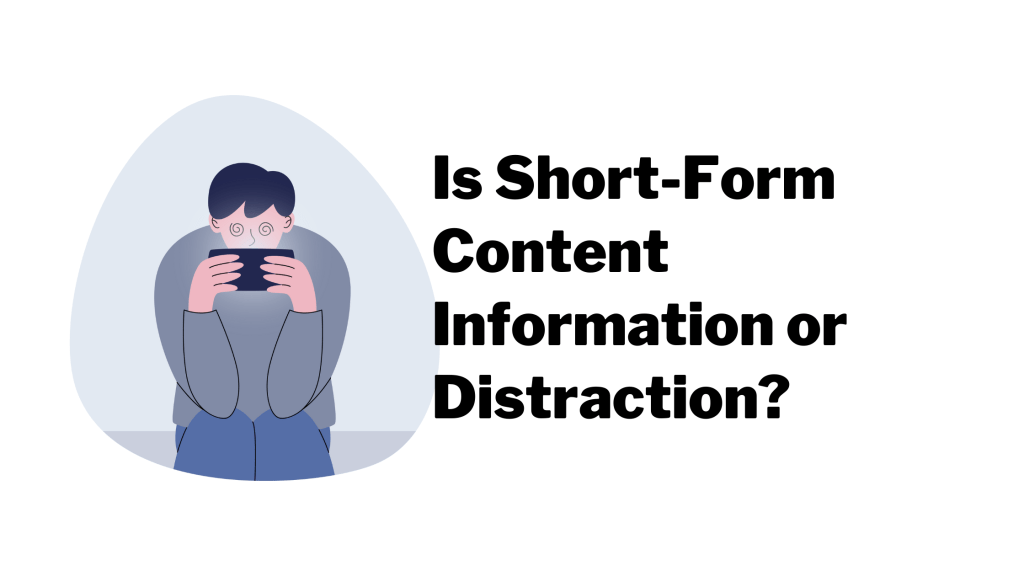
The popularity of short-form content is undeniable whether it is Instagram Reels, YouTube Shorts, or tweets with up to 240 characters. It is a testament that our attention span is decreasing and so is our reading comprehension and critical thinking. Short-form content doesn’t challenge our preconceived notions, biases, and prejudices but rather feeds into it. The loop of algorithms that we are stuck within enables us to validate ourselves and our opinions. You will rarely come across a point of view that challenges you or pushes you to think beyond the boundary you have built for yourself on a particular subject.
Moreover, our brains have been rewired ever since Instagram and YouTube started depending heavily upon short-form video content. One second you will be watching a video of people being killed in a genocide and as you scroll you’ll see pandas clinging to the legs of their caretakers. The accessibility and the ease with which this content is available to us do not let us process the gravity of the content that we are consuming. We are immediately fed with what is next. It is no surprise that platforms like TikTok, Reels, and Shorts are severely affecting our attention spans. Activities that don’t offer instant and constant gratification don’t interest us anymore. There is a lack of individuality because everyone is watching the same content, tailoring their personalities to adapt to the content they are watching, and performing for the same audience.
To summarise, the shift from print to digital and a boom of short-form audio-visual content is what has largely contributed to entertainment becoming a distraction. Entertainment does not have to be rewarding. I am also not saying to intellectualise everything. Sometimes, it is okay for a piece of media to just be. But information, knowledge, and comprehension cannot be compressed into a 30-60-90-second video. We must engage our brains in tedious activities such as reading, writing, critical thinking, analysis, and more to exercise it and question the constant reinforcement of our perspectives and opinions.
In the next Part, I’ll elaborate on the internet being filled to the brim with content and our rising hatred towards boredom.

 You Are Spring
Leave a comment