I have been pondering the notion of one carrying their grief around for a long time. Recently, I came across the poem, sorrow is a promise, by Sanna Wani and the following lines stayed with me:
Grief is not a useful thing to begin with and neither am I — so here we are, mourning our whole lives.
I was talking to a friend last month who lost her mom to cancer at the age of eight. She has been staying with her grandmother since then. She told me that up until a few years back she believed she would be able to deal with a loved one’s death better now that she had experienced what losing a loved one feels like. However, she recently accepted that she wouldn’t be ready to process the grief as gracefully as she had thought of her grandmother’s death, whenever it happened.
Whenever I meet someone new and we get to know each other, it often leads to questions about family. As soon as they come to know that I lost my father when I was five, the question that comes to me most often is, “Does it still hurt?” On some days, though, I am offered condolences. These are the times when I respond with a weak, “It’s okay, it has been a while now,” as if that changes anything.
It has been a while, yes, but the void that my father’s death left behind stays with me, the wound as fresh as it was on the day he died. Or maybe it is something else. It has been difficult to chart my grief for my father. I was just a kid who knew nothing of death back then. Some days, I hoped he would come back. During those few years in the beginning, I didn’t feel the pain of losing someone, losing a loved one, losing a father — just an unexplainable absence.
Years later, when I was an anxious and worried teenager, I missed him even more. I had friends with healthy relationships with their fathers and I envied them for it. Around these years, I blamed everything that had gone wrong in my life on his absence. “If my father hadn’t died, I would be more happy and confident,” “If my father hadn’t died, we would’ve had more money,” If my father hadn’t died, my mother would’ve been happier.” More and more problems kept cropping up for which I continued to blame him even though he was seemingly not at fault.
Lately, I have tried to be kinder to him and his memory. There are a lot of things that still remind me of him. I still have dreams about him and I would give anything to fill the void that his death left behind. Yet, do I resent him for not being with me? No. This was his life. He lived it. He was here for however long he was meant to be. I will neither disrespect fate, nor his memory. I believe that things would have been better if he had been around. But he wasn’t. On some days, I have made my peace with it. On others, I miss him terribly and grieve for him.
This constant presence of grief and dealing with it constantly made me think a bit about how we grieve and whether it is a phenomenon that stays with us forever. This brought me to Dr. Lois Tonkin’s model of ‘Growing Around Grief.’ In this model, she explains that with time, grief does not grow smaller, rather our lives grow around it.
Dr. Tonkin, a Grief Counsellor, starts by expressing her perplexity when her clients state that their pain was just as bad as ever even though she witnessed them growing and going on with their lives. The pain had never really gone away.
She then met a woman in a workshop who explained how grief worked for her — her model of grief — after her child died a few years back. The woman explained that at the time of her child’s passing, grief had consumed her entirely. She drew an image to represent it:
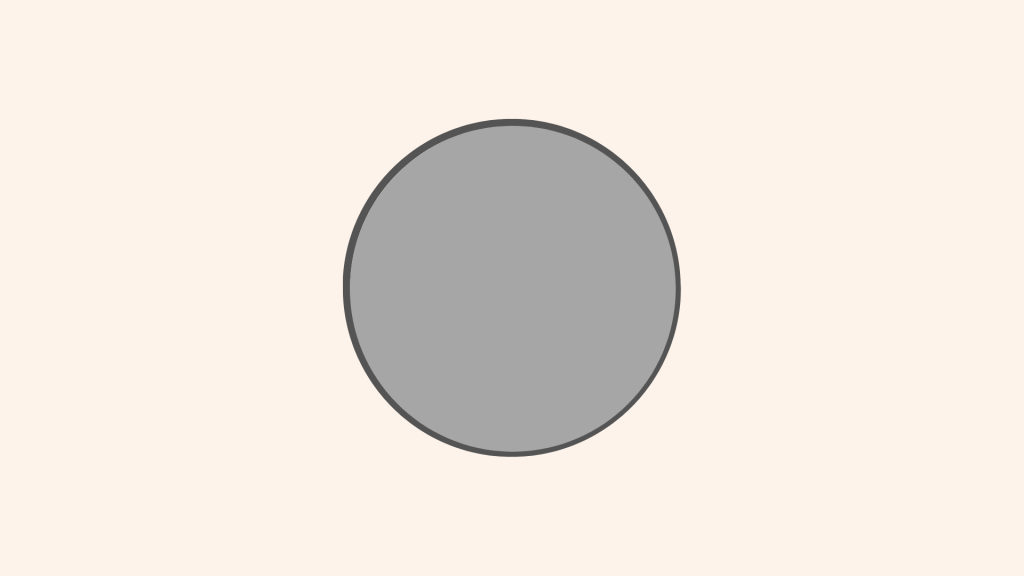
With time, however, she imagined her grief to shrink, grow smaller, and become manageable. She was aware that it wouldn’t disappear entirely, that it would fit into her life. She had imagined it to look like this:
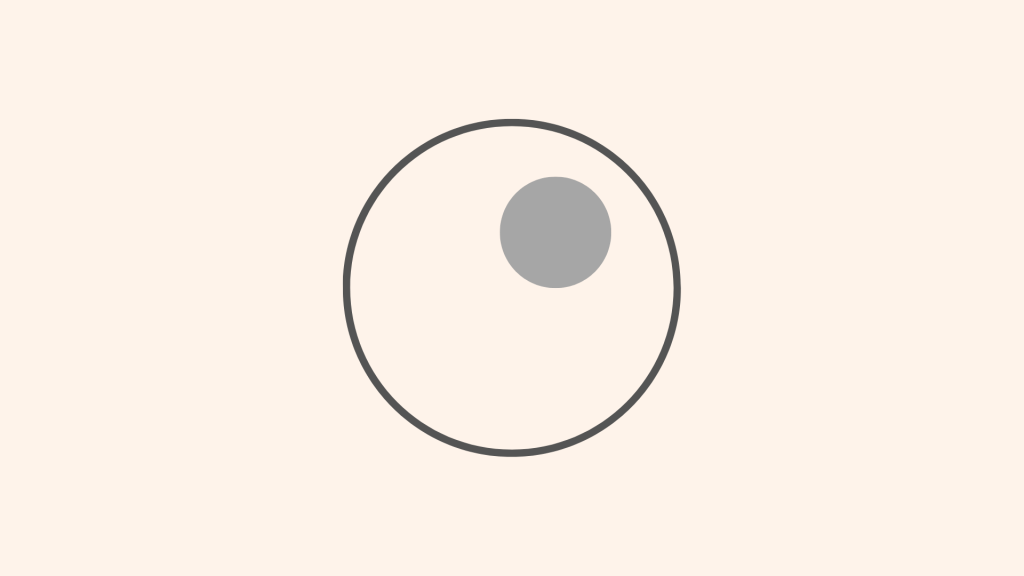
But what happened was different:

Her grief remained as it was, it was her life that grew around it. There were times, moments, and anniversaries that reminded her of her child… when she functioned from her grief and it felt just as intense as ever. But increasingly, she could manage to experience her life from the larger circle of her life too.
This model brings me immense comfort because it doesn’t force me to let go of my grief completely. It helps me give meaning to the dark days and interpret the depth and experience that the death of a loved one brings.
There isn’t a definite path that your grief follows and grows to be. There isn’t always a resolution stage at the end either. Sometimes, the pain is as bad as the day before and there is nothing that we can do. Your grief is still there. It hasn’t vanished or evaporated. You may learn to deal with it better but there will be days where it will be so overwhelming that you will be able to do nothing but succumb to it. And probably that is what it means — to be able to deal with it. To know that even when you give in to the pain, even when you believe it’s going to be difficult to come through to the other end, you know that you will make it. That there might not be a stage where the grief will go away but definitely a way through.
I am still finding answers to the notion of grief, one that stems from dealing with the loss of a loved one. I have realised that there are some days when I believe that my father’s death doesn’t hurt me as it used to. And just around that time, there will be a time when the universe thinks of humbling me and I am reminded of how much it changed me and the trajectory of my life. It is that one event in my life that shaped who I am as a person, what choices I make, what my interpersonal relationships look like, what human connection is to me, and what I think about finance and family and friends and love.
Losing a loved one is difficult to deal with, even more so when you’re a child. You have so many questions yet no one to answer them. You want to ask where did your father go. You want to ask if he will come back. You want to ask what happened to him. And you grow and you pass through life with all these questions unanswered, carrying the weight of grief till the end.

 You Are Spring
Leave a comment